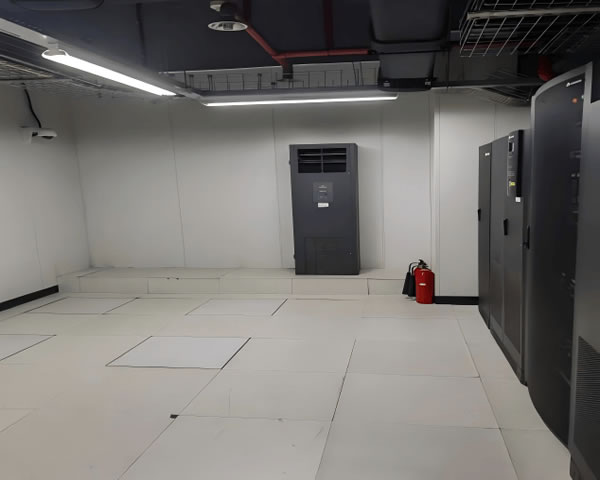
before deploying a cloud server in japan, it is very important to understand the overall context of the "step-by-step explanation of the configuration choices and network settings of the japan cloud server purchase process." this article uses a professional perspective to step by step explain pre-purchase preparations, computer room and region selection, instance and storage configuration, network access and security strategies, as well as high availability and monitoring recommendations to help you achieve low-latency, stable and compliant cloud deployment in japan.
preparation and needs assessment
first, clarify the business goals and technical requirements: target user distribution, concurrency, bandwidth peak, data sovereignty and compliance requirements. use performance baseline testing and traffic estimates to determine the required cpu, memory and storage scale, and decide whether dedicated line or hybrid cloud connectivity is required. this step can avoid the complexity and cost waste caused by frequent configuration adjustments in the later period.
select computer room and region
choosing a suitable japanese computer room requires considering network latency, backbone interconnection, legal compliance and redundancy. try to choose an availability zone close to the main user group to reduce latency, and confirm that the provider provides multi-availability zone support in the same city or different cities for disaster recovery and traffic balancing. it is also necessary to check the network exit and interconnection partners of the data center to ensure the efficiency of cross-border access.
instance configuration selection (cpu, memory)
cpu and memory size assessment
select an instance series based on the application type: computing-intensive applications should prioritize high clock speeds and more cores, while memory-intensive database or cache services should be configured with larger memory. in the early stage, you can choose elastically scalable specifications and combine automatic scaling strategies to deal with traffic fluctuations, which not only ensures performance but also optimizes costs.
storage and disk solutions
storage selection should take into account both performance and durability: it is recommended to use low-latency solid-state disks for system disks, and high-iops ssds or tiered storage strategies for business data. for the database, iops, latency and consistency guarantees need to be considered, and regular snapshots and off-site backups must be enabled to implement data recovery strategies. choose encryption-enabled storage options to meet compliance needs.
network bandwidth, ip and connectivity
network settings include public network bandwidth, elastic public network ip, private network and cross-regional connections. select the appropriate peak bandwidth and billing model based on the access model, and apply for an elastic public ip and load balancer if necessary. for enterprise-level needs, the japanese cloud environment can be accessed through vpn or dedicated lines to achieve stable and low-latency hybrid cloud interconnection.
security and access control
develop access control and security policies: enable security group and subnet isolation, least privilege iam policies, ssh key or certificate login, and multi-factor authentication. combines host protection, vulnerability scanning and ddos protection capabilities to ensure network egress is controlled. log audit and compliance records should be maintained as part of a long-term strategy.
high availability and backup strategy
achieving high availability requires multi-availability zone deployment, load balancing, and automatic failover strategies. the database and status data should use master-slave replication or distributed storage, and regular off-site snapshots and backup drills should be performed. develop recovery time objectives (rto) and recovery point objectives (rpo), and conduct drills to verify the feasibility of backup and failover processes.
monitoring, logging and performance optimization
after going online, a comprehensive monitoring and alarm system is established, covering resource utilization, network latency, disk io and application layer performance. centralized log collection and analysis helps locate problems and perform capacity planning. continuously improve user experience and control operating costs through performance testing and optimization (such as caching strategies, connection pools and cdn acceleration).
summary and suggestions
in short, this step-by-step explanation of what the japanese cloud server purchase process looks like. configuration choices and network settings should be based on needs. a detailed assessment should be made first, and then trade-offs should be made in terms of computer rooms, instances, storage, networks, security and high availability. it is recommended to conduct a small-scale pilot first to verify performance and connectivity, and then gradually increase the volume, and cooperate with monitoring and backup strategies to ensure long-term stable operation.